Moonpull & Gen3 on the Frontlines of Affiliate Tracking
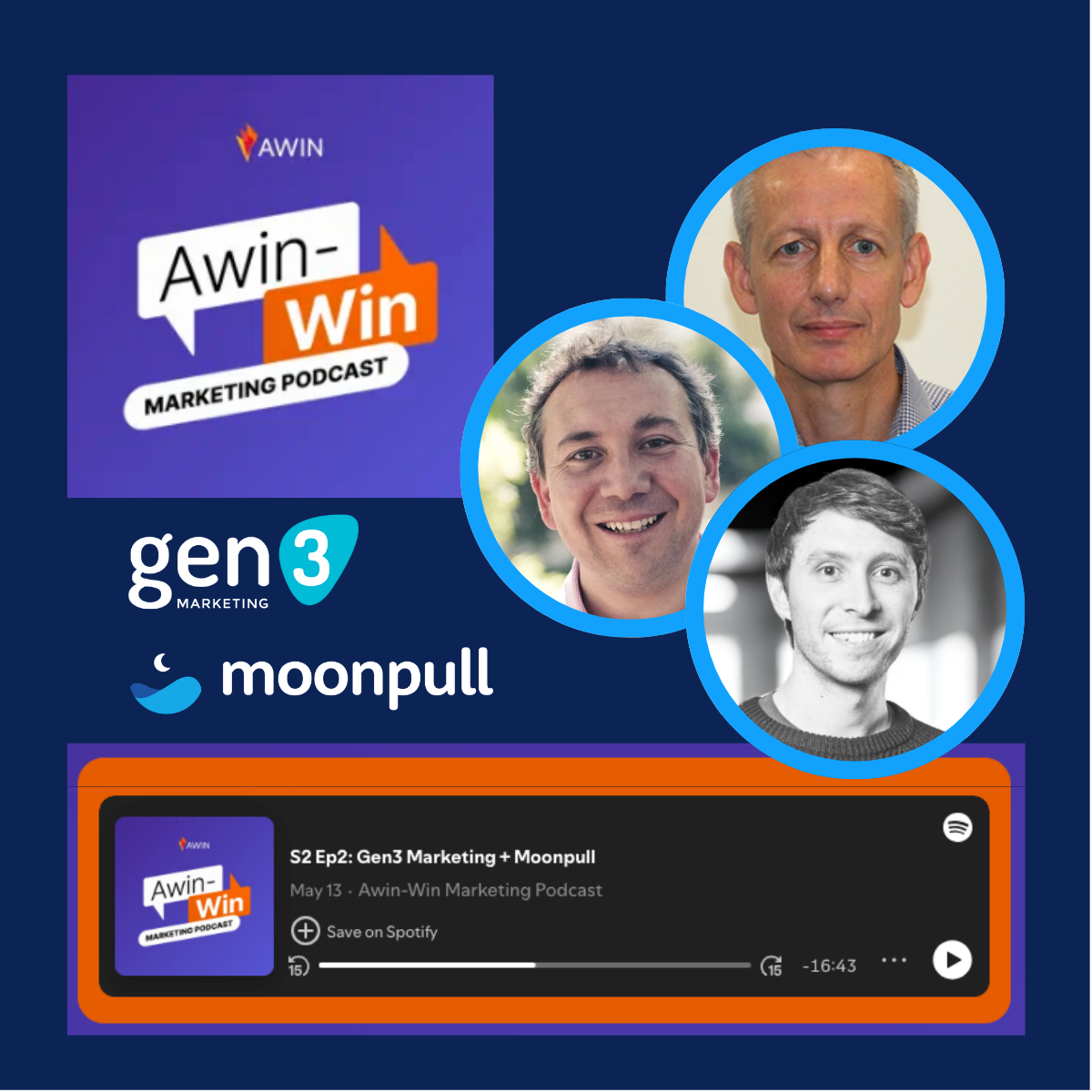
In a recent Awin podcast in the Awin-Win series, Moonpull founder Steve Brown and Greg Baines, SVP of Gen3 Marketing were in conversation with Awin's Rob Davinson on the complex subject of affiliate tracking -- going beyond the click.
The focus was particularly appropriate from Awin's viewpoint as they are in the process upgrading many hundreds of advertisers' tracking to comply with the requirements of their Conversion Protection Initiative. Rob highlighted that Gen3's work with Moonpull is navigating the same conversations with advertisers, and how the partnership with Moonpull helped Gen3 lift the lid on tracking issues and get ahead of them before they became longer term issues.
The conversation really homed in on how Gen3 managed affiliate tracking as an agency and went on to discuss how Gen3 has taken advantage of the detail in Moonpull reporting to make managing tracking a much simpler part of what is already a wide-ranging role, managing affiliate programs.
Why tracking still breaks
Greg shared that regardless of strides in development in tracking, it does still break: "We need to be sharing that there are 10-15 ways that tracking can break and as a collective industry, that we're on top of them so we can educate, learn and fix".
Tracking breaks -- often quietly -- and for surprisingly mundane reasons. As Greg noted, "It's often not malicious or negligent -- it's just no one owns it end-to-end. And when tracking does break, the consequences ripple across teams, performance data, and ultimately, revenue."
"Sometimes it's a misconfigured cookie banner, a developer team that's siloed off from marketing, or a minor change to a Shopify tag," explained Steve. "The half-life of tracking is real and implementations decay unless monitored."
He stressed that "rarely is tracking completely broken, because in that case it gets spotted. But many advertisers are still sitting at a 5 or 6 out of 10 due to poor consent implementation or device/browser inconsistencies".
Greg highlighted the importance of consistency: "If we can't standardize the affiliate space, we at least build reliable habits, regular checks, shared frameworks, and mutual accountability across advertisers, agencies, networks, and publishers."
Steve expressed the view that there needs to be a better understanding of the levers that the different players are pulling so you can do a better comparison from one program to another. Understanding how matters like cookie windows, priority and attribution all impact on whether transactions are appropriately recorded to the affiliate channel.
Gen3 and Moonpull
Moonpull and Gen3 have been working together for over six months to audit tracking across Gen3's client portfolio, with very positive results. Some of the key outcomes from the relationship are:
- Cookie consent issues are the most frequent (and most overlooked) as it's not something the advertisers' marketing teams typically consider when checking tracking.
- Moonpull's traffic-light audit system simplifies what was once a murky and reactive process.
- Advertisers are more responsive because the fixes are actionable and based on a specific and recent change and not just vague "is the tracking working?".
Clients have been really receptive: "They really value it. They thank us for highlighting where there's issues more promptly and giving them the data to fix them more easily, because a small client might have to outsource the request to a development consultancy. We do find they're very responsive and we get things fixed relatively quickly".
There's an education gap
A standout theme of the discussion was how both essential education and shared understanding are. "Tracking can feel scary; It's code and a lot of marketers think -- that's what the dev team do." Marketers hand it off to developers, who don't always have the full context. Greg explained, "That's why Moonpull's approach, making issues visible and understandable; for example, identifying when a 'memory cookie' is missing -- makes it easier for teams to take action."
As Rob put it, "I guess that that sort of fragmentation and lack of standardization is arguably one of the characteristics of the channel. Working with lots of different types of partner, we know that programs have different terms. They have different approaches to how they reward publishers with commission. Like a lot of it is so nuanced and individuated".
Even on things as simple as cookie duration, Steve and Greg discussed how consistency is important for publishers to understand it and how it needs to be consistent between affiliate and search. Steve added that Safari may well have its own view on cookie duration regardless of the advertiser's preference, so Safari and Chrome may well perform differently.
These areas are ones where Moonpull really helps by simplifying the language around tracking with terms like the Memory Cookie -- and simply identifying whether it is present means tracking is no longer as scary. Both the marketer and the developer know what's being communicated and "everyone in the chain can feel comfortable".
Program Certification
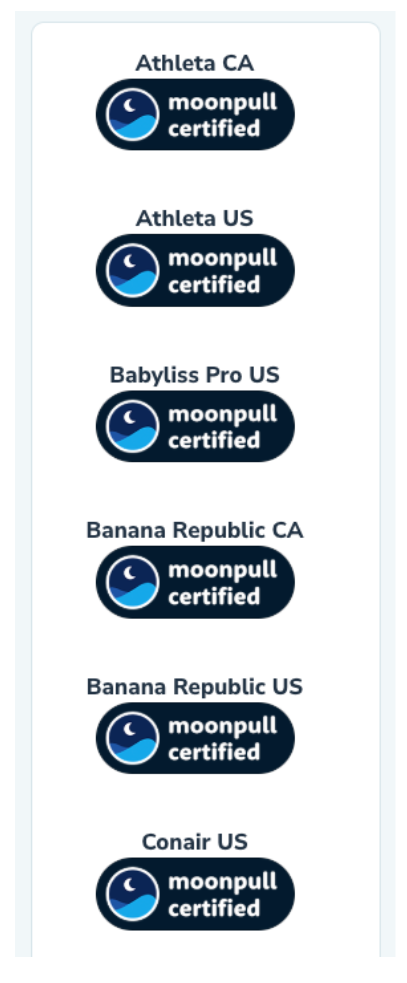
To contribute to transparency in the tracking relationships, Moonpull provides certification for advertisers who consistently undertake monthly audits, giving assurance to publishers that an advertiser takes tracking seriously.
As Greg emphasised, checking first-party tracking is a continuous journey as changes are happening all the time. "We work with our clients to make sure they're all tracking correctly and everything's compliant. And then doing those regular audits, looking towards having advertisers certified, so publishers understand that advertisers take tracking seriously." Steve added, "This is really important for the future... This isn't about naming and shaming; it's about raising the bar".
Summary
Rob closed the conversation by asking: What's one thing you wish more people in the affiliate world understood about tracking?
Steve: "That first-party tracking means both JavaScript and server-to-server. It's not one or the other."
Greg: "That tracking isn't someone else's problem. It's a collective responsibility, and everyone has a role in keeping it working."
Steve concluded with "It's crucial to the integrity of the channel that things track well and the affiliate industry occasionally complains about not tracking back to the click. It's important to realise that other marketing channels have even bigger issues and having a first-party model is actually a pretty good place to be".
Listen to the full podcast
There is a lot to unpack from this conversation, so listen to the full recording on Awin's website or on Apple or Spotify.
Related Articles: